THE TRUE-SCALE DIAMOND STUDIO

See the carat. Feel the scale.

Explore diamond proportions, shapes and actual dimensions on your finger.

Screen scale96 PPI default
Resolution±0.05 mm steps
Privacy100% on-device
StandardsUS · UK · EU · JP · IN
ANIMATED VISUAL GUIDE · HOW TO MEASURE IN 15 SECONDS
STEP 1 · CALIBRATEHold a card to screen (or pick device) Tap to open calibration
STEP 2 · PLACE & ALIGNPlace ring on circle & match INSIDE edge Tap to scroll to stage · Use slider or ← / → keys
STEP 3 · YOUR SIZERead your size on the right or save card Tap to download PNG Size Passport
On-finger view
1:1 OPTICAL STUDIO
Diamond weight
1.00ct
Calibration needed1:1 scale
FACE-UP PROPORTIONS6.50 × 6.50 mm · SOLITAIRE
Typical cut dimensions · actual stones vary
A perfect fit starts with calibration.

Match a bank card to your screen for true-to-life measurements.

Quick carat benchmarks & cut geometry
INSTANT JUMP
Face-up area33.2 mm²
Pavilion depth4.00 mm
Table width3.70 mm
Finger coverage38%

Three small steps. One confident fit.

THE METHOD
01

Calibrate your screen

Match a standard bank card to the calibration outline.

02

Choose your stone & setting

Compare carat weight, 10 shapes, setting styles, and cut depth/table.

03

See its proportions

The silhouette uses calibrated face-up dimensions on your finger width.

Evening check: Measure when hands are warm.
Wide bands: Add +0.25–0.5 size for 6 mm+ rings.
Zero parallax: Look straight down at the crosshair.
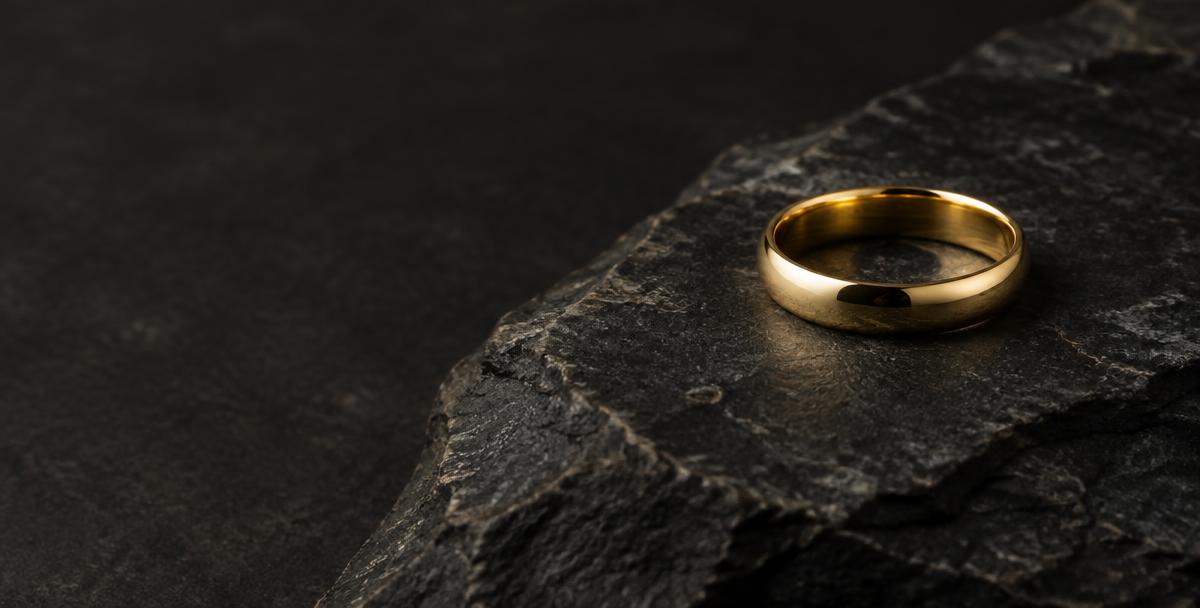
Polished gold wedding band on dark stone
MADE FOR THE MOMENT

Small detail.
Lifelong difference.

Measure with a little more care.

METROLOGY & SIZING REFERENCE GUIDE

Diamond Carat Weight vs. Real-World Millimetre Dimensions

Why carat measures mass (0.20 grams) rather than visual spread—and how shape, cut depth, table percentage, and setting style transform on-finger presence.

GEMOLOGICAL PHYSICS

Why Carat Weight Follows a Cube-Root Curve

Because a diamond is a three-dimensional crystal, doubling the carat weight does not double its face-up diameter—it increases linear dimensions by roughly the cube root of 2 (~26%). A well-cut 1.00 ct Round Brilliant measures ~6.50 mm across, while a 2.00 ct Round Brilliant measures ~8.10 mm across.

0.50 ct Round ≈ 5.15 mm · 1.00 ct ≈ 6.50 mm · 1.50 ct ≈ 7.40 mm · 2.00 ct ≈ 8.10 mm
SHAPE ELONGATION

Oval, Pear & Emerald Cuts: Maximising Finger Coverage

Elongated fancy shapes (Oval, Pear, and Emerald cuts with 1.35:1 to 1.55:1 length-to-width ratios) spread more of their mass across the top surface and create a lengthening optical illusion along the finger. A 1.00 ct Oval (~7.8 × 5.6 mm) spans noticeably longer on the finger than a 1.00 ct Round (6.5 mm).

1.00 ct Round: 6.5×6.5 mm · Oval: 7.8×5.6 mm · Emerald: 7.0×5.0 mm · Pear: 8.6×5.6 mm
CUT & SETTING IMPACT

Depth Percentage, Spready Cuts & Halo Framing

A deep-cut diamond (>64% total depth) hides weight in the pavilion ("bottom-heavy"), making a 1.00 ct stone look like a 0.85 ct stone face-up. Conversely, adding a 1.3 mm micropavé halo or 0.65 mm gold bezel dramatically increases the visual footprint and finger coverage percentage.

Ideal Round Depth: 59%–62.5% · Table: 54%–58% · Pavé Halo: +2.6 mm Total Span
FREQUENTLY ASKED QUESTIONS

Expert Answers on True-Scale Sizing & Fit

ISO 8653 · GIA · HOROLOGY STANDARDS
How many millimetres is a 1 carat, 1.5 carat, and 2 carat round diamond?

An ideal-cut 1.00 carat Round Brilliant diamond measures approximately 6.40 to 6.50 mm in diameter. A 1.50 carat round diamond measures ~7.30 to 7.45 mm, and a 2.00 carat round diamond measures ~8.05 to 8.20 mm.

Why does the same carat diamond look bigger on a size 5 finger than a size 8 finger?

Visual presence depends on the ratio between the diamond’s width (plus setting) and your finger’s horizontal width. On a US Size 5 finger (15.7 mm diameter), a 6.5 mm 1-carat round covers ~41% of the finger span; on a US Size 8 finger (18.2 mm), the same stone covers ~35%.

Which diamond shape looks the largest per carat?

Pear, Marquise, and Oval brilliant cuts offer the largest face-up length and surface area per carat because they have shallower pavilions and elongated length-to-width ratios. Cushion and Asscher cuts typically carry more depth in the pavilion and appear slightly more compact face-up.

How much bigger does a halo or bezel setting make a diamond look?

A delicate 1.3 mm micropavé halo adds 2.6 mm to both the length and width of the centre stone—giving a 1.00 ct round diamond (6.5 mm) the 9.1 mm overall outline of a ~2.75 ct solitaire. A full gold bezel adds ~1.3 mm to the total diameter while protecting the girdle.

What are ideal depth % and table % for a diamond?

For a Round Brilliant diamond, GIA Excellent cut proportions typically fall between 59.0% and 62.6% total depth and 54% to 58% table facet width. Fancy shapes like Emerald and Oval cuts often range between 60% and 68% depth.

Can I share or print my custom diamond and finger comparison?

Yes. Use the "Copy link", "Share", or "Print / PDF" buttons in the right-hand control dock to generate a shareable URL with your exact carat, shape, setting, depth %, table %, and finger width encoded.